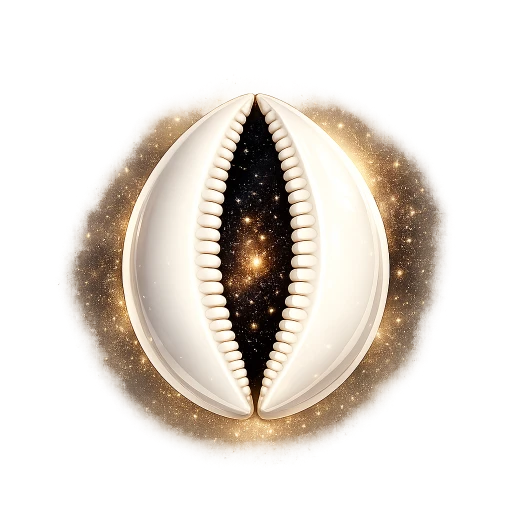
No Òrìṣà has been more catastrophically misrepresented than Ẹṣù.
Through centuries of colonial encounter and deliberate religious demonisation, Ẹṣù: the divine messenger of the Yorùbá tradition, the guardian of crossroads, the opener of all doors: was mapped onto the Christian concept of the devil. His imagery was distorted. His name became a slur. Entire generations of Yorùbá diaspora were taught to fear the very force that stands between them and their path.
It is time to correct the record.
Who is Ẹṣù?
Ẹṣù: known as Legba in Haitian Vodou, Exu in Candomblé, and Eleguá in Lucumí: is the divine messenger and intermediary between human beings and the Òrìṣà. He is the guardian of crossroads, doorways, markets, and all points of transition.
He is not evil. He is not the devil. He is the first Òrìṣà honoured in any ceremony - because without his blessing, no message reaches the other Òrìṣà, no prayer is heard, no door opens.
His sacred colours are red and black. His number is three. His day is Monday.
The great misunderstanding
The colonial demonisation of Ẹṣù was not accidental. It was strategic.
Ẹṣù is the guardian of communication: the one who carries messages between worlds. To cut a people off from their spiritual messenger is to cut them off from their entire cosmological framework. Rename the guardian of your crossroads as evil, and you cannot find your way home.
Many people of Yorùbá descent carry a deep, inherited fear of Ẹṣù that has no foundation in the actual tradition. Healing this: returning to a right relationship with the opener of doors: is part of the broader work of cultural and spiritual reclamation.
His Oríkì
Ẹṣù Òdàrà, ò ní jẹ kí ojú rí ibi
Ẹni tí ń bẹ ní ìwájú, ẹni tí ń bẹ léhìn
Ẹṣù tó n gbé ọ̀nà, má jẹ kí a rìn ní òkunkun
Láàárọ̀ ní a ń pè é, òru ní ó ń dáhùn
Ẹṣù Òdàrà, who does not let the eye see evil
The one who stands before us, the one who stands behind
Ẹṣù who owns the road, do not let us walk in darkness
We call him in the morning, he answers at night
That final line is crucial: we call him in the morning, he answers at night. Ẹṣù operates on his own timing. His interventions are precise, but they arrive when they arrive. Those who carry his energy learn the art of patient preparation: and the courage to move the moment the door opens.
From the Odù Ọ̀ṣẹ Òtúrá
In Ọ̀ṣẹ Òtúrá, Ifá says:
“Ẹṣù said: I am not the obstacle. I am the revelation of whether you are ready. The door I close was never your door. The door I open has your name written inside it. Come prepared. Come honest. Come without the mask.”
This is the essential teaching. Ẹṣù does not block those who are ready. He reveals unreadiness: so it can be addressed before it becomes catastrophe. A closed door from Ẹṣù is not rejection. It is redirection.
For readers who want to sit with verses like Ọ̀ṣẹ Òtúrá directly rather than only read about them in passing, we recommend The Holy Odu: A Collection of Verses from the 256 Ifa Odu with Commentary by Awo Fasola Fategbe Fatunmbi. Ẹṣù lives across the Odù: in Ọ̀ṣẹ Òtúrá especially: and meeting him through the verses themselves, with patient commentary alongside, is a very different encounter than meeting him only through articles like this one.
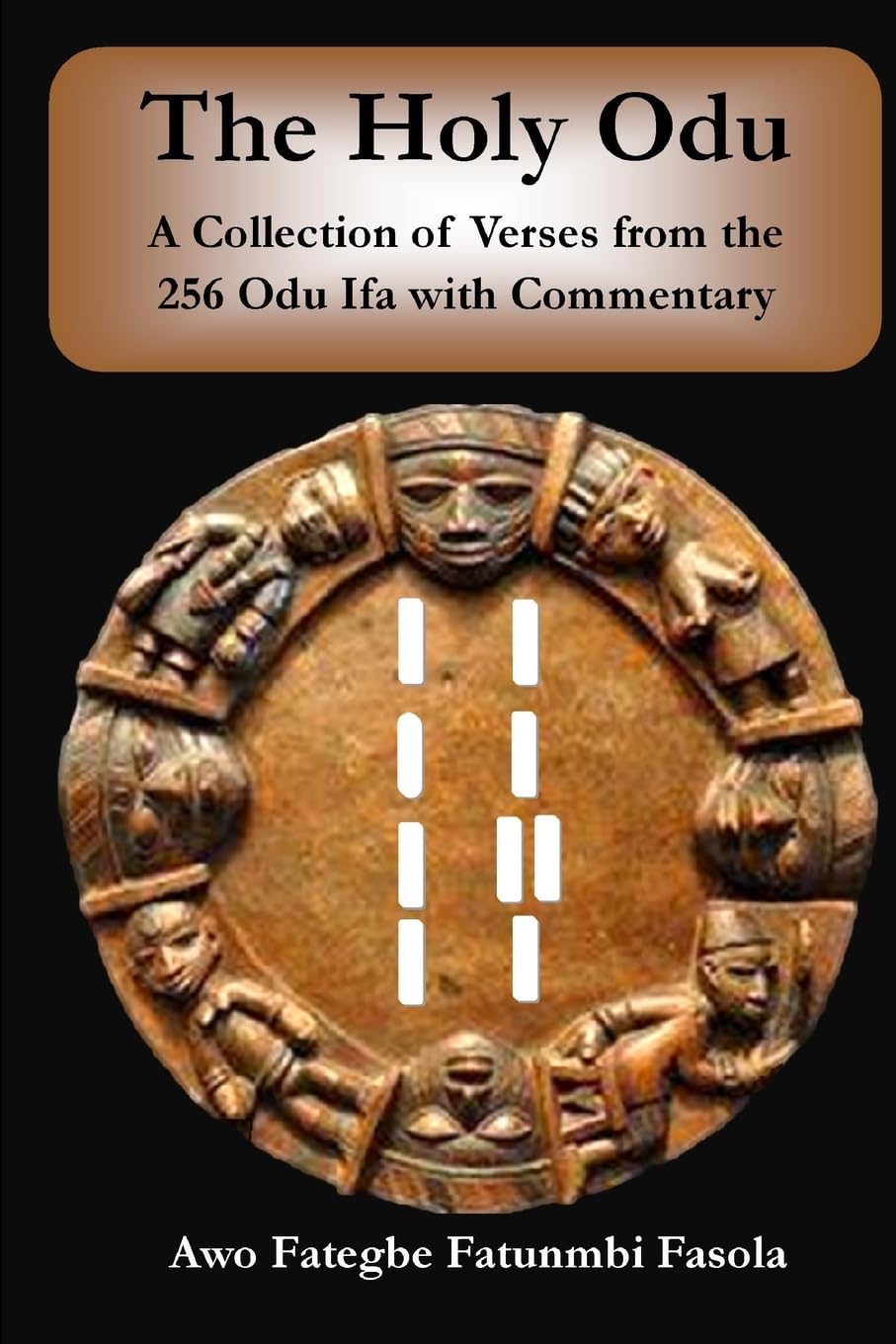
As an Amazon Associate, Ifá Discovery earns from qualifying purchases.
Signs Ẹṣù energy may be present in your life
Your life has been characterised by sudden, unexpected turns: both devastating and miraculous. You are a natural communicator, mediator, or translator. Crossroads moments define your biography. Children and the very old are drawn to you. And trickster moments follow you: things happen that are simultaneously infuriating and, in retrospect, hilarious. The universe seems to have a specific sense of humour about your life.
What Ẹṣù asks
Ẹṣù asks for radical, unflinching honesty. He cannot be fooled and has no patience for self-deception. He asks you to stand clearly at your crossroads, know what you want, and have the courage to choose it.
And he asks: above all: that you do not fear the crossroads. The crossroads is not a place of danger. It is a place of possibility. It is where your path becomes yours.
Àṣẹ at the threshold
If you are reading this, you are likely standing at a crossroads of your own. Something brought you here. Something in you is seeking orientation.
Ẹṣù is the one who opens the door to that knowing.
This article is for educational purposes. Ẹṣù's full mysteries are deep and require initiated guidance. We encourage all sincere seekers to work with a qualified Babaláwo or Ìyánífá. Àṣẹ.